The living topic covers the broad issue of bank fees and consumer protection, detailing various hidden and excessive fees that banks and financial institutions charge, such as overdraft fees, early termination fees, and fees from payday lenders. It includes regulatory actions by the Consumer Financial Protection Bureau (CFPB) and other federal agencies to combat these fees and protect consumers. The content also highlights consumer complaints, lawsuits, and new rules aimed at making fees more transparent and limiting their impact on consumers. Additionally, it touches on related issues like junk fees in other industries and the overall decline in customer satisfaction with banks due to poor service and fee practices.
Court Overturns CFPB Rule on late fees: A federal court in Texas vacated a Biden-era Consumer Financial Protection Bureau (CFPB) rule that capped credit card overdraft fees at $8. The court's decision followed a settlement between the CFPB and several plaintiffs.
Legal Grounds for the Overturning: The CFPB acknowledged it overstepped its authority under the Credit Card Accountability Responsibility and Disclosure Act and violated the Administrative Procedure Act. The Trump administration supported the plaintiffs, leading to the CFPB requesting the court to nullify the rule.
Stakeholder Reactions and Impact: The plaintiffs claimed the rule would have negatively affected consumers by increasing late payments and reducing credit access, especially for those with low credit scores.
A federal court in Texas has vacated the Consumer Financial Protection Bureau’s rule on credit card late fees a day after the American Bankers Association and other plaintiffs reached an agreement with the bureau to end a lawsuit over the rule.
ABA last year joined the U.S. Chamber of Commerce and other plaintiffs in challenging the rule in U.S. District Court for Northern Texas, arguing the bureau exceeded its statutory authority. Under the terms of the settlement, the CFPB acknowledged it exceeded its authority under the Credit Card Accountability Responsibility and Disclosure Act, and that the late fee rule violates the Administrative Procedure Act. The CFPB asked the court to vacate the rule, which it did.
The rule, issued during the Biden administration, limited late fees to $8, after determining that amount was the actual cost . In other words, the bureau ruledincurred by the lender. In other words, the rule stated that lenders could not make a profit on late fees.
In a joint statement, ABA and the other plaintiffs welcomed the court’s decision.
“This is a win for consumers and common sense,” the plaintiffs said. “If the CFPB’s rule had gone into effect, it would have resulted in more late payments, lower credit scores, higher interest rates and reduced credit access for those who need it most. It would have also penalized the millions of Americans who pay their credit card bills on time and reduced important incentives for consumers to manage their finances.”
Under the Biden administration, the CFPB said the rule would save U.S. consumers an average of $220 a year.
State attorneys general urge House to reject axing overdraft fee
UPDATE: Despite the pleas of consumer advocates the House voted largely along party lines to trash the consumer protection overdraft bill, with Republicans mostly voting to do so and Democrats largely opposing it.
Key Points:
New York AG Letitia James and 22 other attorneys general are urging the U.S. House to reject a resolution that would reverse the Consumer Financial Protection Bureau’s 2024 rule capping overdraft fees.
The CFPB rule applies only to large banks with over $10 billion in assets, limiting excessive fees that can damage credit and force account closures.
Critics say overturning the rule would prioritize bank profits over consumers, as overdraft fees often exceed the overdraft amount and disproportionately hurt low-income Americans.
A coalition of 23 attorneys general, led by New York Attorney General Letitia James, has sent a letter to U.S. House leaders urging them to vote against a resolution that would overturn a key Consumer Financial Protection Bureau (CFPB) rule limiting overdraft fees charged by the nation’s largest banks.
The CFPB rule, finalized in 2024, aims to rein in excessive overdraft fees, which have long been a lucrative but controversial source of revenue for banks. It applies only to banks with more than $10 billion in assets and is designed to protect consumers from predatory charges when they accidentally overdraw their checking accounts.
“Overturning this rule will only do one thing: help big banks profit at your expense,” said AG James in a statement. “Accidentally overdrawing your account by a few dollars shouldn’t result in an outrageous fee.”
Banks favor scrapping the consumer protection measure, which they say does more harm than good. "It’s important to remember that government-imposed price controls only harm the consumers they’re purported to help," the Consumer Bankers Association argues in a statement on its website.
Overdraft fees: A costly burden
The average overdraft fee is around $35, often far exceeding the actual overdrawn amount. In 2023 alone, U.S. banks collected $5.8 billion in overdraft-related revenue. According to the AG coalition, a $35 fee on a $26 overdraft—typically repaid within three days—is equivalent to an annual interest rate of 16,000%.
The attorneys general argue that such fees are not only excessive but also disproportionately harm low-income consumers, frequently leading to credit damage and involuntary account closures that can push people out of the banking system altogether.
The CFPB rule, if preserved, would force banks to treat overdraft fees like interest on a loan, making their true cost more transparent and subject to regulatory scrutiny.
All eyes on the House
The House is expected to vote on House Joint Resolution 59, which would nullify the CFPB’s overdraft rule. The Senate narrowly passed its version last month in a 52–48 vote, with Republican Senator Josh Hawley (Mo.) joining Democrats in support of the consumer protection.
Supporters of the CFPB rule point out that many major banks — including Citigroup, Capital One, and Ally Bank — have already eliminated overdraft fees voluntarily, demonstrating that such charges are not essential for maintaining basic banking services.
Joining AG James in signing the letter are attorneys general from California, Illinois, Massachusetts, North Carolina, and other states, as well as the Hawaii Office of Consumer Protection.
With tens of millions of consumers affected by overdraft policies each year, the outcome of this vote could have major implications for bank customers nationwide — particularly those living paycheck to paycheck.
Choosing the best banking option isn’t always easy
Choosing the right banking option can be complex, with consumers weighing features like fees, accessibility and digital tools across traditional banks, credit unions, online banks and fintech firms.
Key Insights:
Credit unions tend to have the highest customer satisfaction, offering personalized service and fewer fees.
Online banks attract consumers with higher interest rates and no fees but lack in-person services.
Fintech firms and brokerages provide innovative features but may face challenges with customer support.
Brick-and-mortar banks offer convenience for in-person banking but often charge more fees and have lower customer satisfaction.
Many consumers use multiple accounts across different providers to maximize benefits like higher interest rates, better apps, or broader ATM access. As options grow, assessing your banking needs—such as fee tolerance, access to in-person services, and digital tools—is key to finding the best fit.
Nearly 10,000 institutions to choose from
As of June 30, there were 4,539 banks insured by the Federal Deposit Insurance Corporation, according to FDIC data, including both traditional brick-and-mortar banks and those operating online. That's on top of 4,533 member-owned credit unions covered by insurance from the National Credit Union Administration.
And in recent years, Americans have also been able to turn to financial technology, or fintech, firms for accounts that can function a lot like traditional checking accounts, offering at the very least a debit card and the ability to have a paycheck directly deposited. Traditional brokerage firms have also gotten into the act, offering cash management accounts that share many of the features of a checking account—or, in some cases, providing actual accounts from an affiliated bank.
But not all of these accounts are created equal. Even among institutions of the same basic type, accounts can vary in terms of monthly fees and whether in-person banking is easily accessible, whether there's ready access to paper checks, and which ATMs account holders can access without a fee. And whether an institution offers branch banking or is strictly online, there's the question of what online banking features are available and how easy it is to contact customer service operators by phone.
In general, experts generally say, traditional brick-and-mortar banks are less likely to offer fee-free accounts than other types of institutions, in what's essentially a tradeoff for the convenience of in-person banking. Offerings naturally vary from institution to institution, and banks sometimes waive fees for customers with larger balances or regular direct deposits.
On top of those complexities, while accounts at traditional banks and credit unions are typically insured up to $250,000 by the federal government, the insurance situation for accounts at other types of institutions can be more complex. "The short answer is: it depends," the FDIC has cautioned the public.
Surveying the landscape
We set out to take a look at what types of financial institutions seem to have the most satisfied customers, and what different types of institutions might have to offer for different consumers. Our first stop was our own ConsumerAffairs customer ratings and reviews, where our readers have weighed in on their experiences with different banks and other institutions through our online review form.
We filtered for valid reviews of financial institutions that offer a checking account or similar product, submitted between Sept. 1, 2020 and Nov. 14, 2024 regarding companies that had at least 10 valid reviews in that period, and found 10,325 in total. Not all of those reviews necessarily specifically address any particular account type at the institution, but many cover features and experiences relevant to any type of product or account, like issues with customer service.
Of course, people tend to fill out online reviews when they've had a particularly memorable experience, and for financial institutions, that often tends to be a negative one, since routine deposits, withdrawals, and interest payments are often unremarkable. And, indeed, the vast majority of the reviews we looked at were negative: About 92.5% were one-star reviews, on a typical one to five scale, with five being the highest, while other recent industry surveys indicate most people are generally satisfied with their financial institutions. One survey released by the American Bankers Association in October found 85% of Americans with bank accounts are "satisfied" or "very satisfied" with their primary bank.
But clear distinctions still emerged in the ConsumerAffairs data between different types of financial institutions—which we divided into credit unions, brick-and-mortar banks, online banks, brokerages, and fintech firms—and those seem to mirror other findings about customer satisfaction with financial services.
Credit unions come out on top
Looking by category, average star rating was highest at credit unions, of which there are two in our review sample: Navy Federal Credit Union and Pentagon Federal Credit Union, also known as PenFed.
Both are among the largest credit unions in the country, and as their names suggest, both have historically catered to people connected with the military and defense operations. PenFed is now open to any U.S. citizen or permanent resident, though Navy Federal remains limited to categories of people including active duty service members and reservists, veterans, civilian Department of Defense employees, and their families.
The two credit unions both received an average star rating of roughly 1.243 during our sample period, and overall 3.47% of credit union reviews were five-star reviews, the highest of any category.
Brokerages
Next in terms of overall star rating were traditional brokerages, of which our sample included two offering checking accounts or something similar: Charles Schwab and Fidelity Investments. Schwab offers checking accounts through the affiliated, FDIC-insured Charles Schwab Bank, while Fidelity offers a cash management account with checking-like features, including a debit card and mobile check deposit.
Both also typically offer reimbursements for ATM fees you may incur if you need to get cash. They collectively saw an average star rating of about 1.204, and about 2.5% of reviewers awarded five stars. Schwab came in the higher rated of the two, with a 1.25 average star rating and 3.57% of its reviews awarding a full five stars.
Online banks
After brokerages came online banks, with an average star rating of about 1.2, and about 3.39% of ratings awarded five stars. There are 10 in our sample, all of them FDIC-insured banks without a traditional network of branches.
The highest average star rating during our sample period for an online bank, about 1.41, belongs to SoFi. It offers a full assortment of financial products, including checking and savings accounts, credit cards, a variety of loans, and investment services.
About 8.97% of its reviews were five-star reviews, with fans praising the ease of setting up and accessing accounts and the lack of fees. A close second in online banking, with an average star rating of 1.375 during the period, and 8.33% five-star reviews, was Varo Bank.
Fintech
Fintech companies saw an average star rating of 1.188 in our sample, and about 3.23% of ratings were five stars. Again, we only looked at companies offering something akin to a checking account and at least 10 valid reviews in our sample period.
The category is a broad one, including businesses offering a wide variety of deposit accounts, investment features, options for depositing cash, loan offerings, and additional features like credit monitoring and money transfer.
Our highest rated institution in this category is Chime, which had an average star rating of about 1.664 and 13.7% five-star reviews.
Brick and mortar
Banks with brick-and-mortar branches came in with an average star rating of about 1.154, the lowest of our categories, and only about 2.18% of ratings were five stars.
Highest rated among them was Armed Forces Bank, which caters especially to military members and their families, though civilians can also open accounts. It had an average star rating of 1.75, with about 16.7% of reviews awarding five stars. USAA Bank, which also caters to military families and generally requires some sort of tie to the armed forces to join, was also relatively well received by our reviewers, with an average star rating of roughly 1.538 and about 7.69% of reviews awarding five stars.
Breaking out the four largest retail banks by assets—Wells Fargo, Chase, Citi, and Bank of America—we saw an average star rating of just 1.138, lower than our average brick-and-mortar bank rating of 1.154. Only about 2% of reviews gave four star reviews. The highest rated of the big four banks was Chase, with an average rating of 1.166 and 2.5% of reviews giving five stars.
So in general, it seems safe to say that our reviewers generally don't see a traditional bank branch network as key to their financial satisfaction, with brokerages, online banks, and fintech companies all being rated higher on average than traditional banks.
That mirrors what some other polls have found: In May 2024, the J.D. Power 2024 U.S. Direct Banking Satisfaction Survey also found online-only banks outperformed traditional banks, though the company noted that satisfaction had declined somewhat from the previous year.
Among checking providers included in the category, J.D. Power's poll ranked Charles Schwab Bank the highest for the sixth year in a row, followed by Capital One, then Ally Bank.
"We do see that in particular the online institutions that are banks do have satisfaction that is quite a bit higher than traditional banks," said Paul McAdam, senior director for banking and payments at J.D. Power, in an interview.
Consumers prefer online banking
Consumers appear to be attracted to online banks by higher interest rates and lower fees, McAdam said, and in some cases by the ease of online banking or particular innovative features in banking apps. Logically enough, affluent customers are likely to be attracted to the ability to earn interest on funds they've saved, and budget-conscious consumers appreciate the lack of fees, McAdam said.
Fintech firms offering bank services, or "neobanks," ranked between online-only banks and traditional banks, he confirmed. Their customers generally report fewer problems overall than traditional banks, but they also tend to find that when they do have problems, it can be harder to reach someone who can actually help, sometimes requiring going through multiple channels including chat sessions and phone calls, McAdam said.
"It's harder to reach phone reps; it's harder to find the 800 number for service," he said. "It's just not as easy to get help with problems."
Traditional banks not abandoned
Studies also suggest that consumers haven't abandoned traditional banks. For one reason, some people still prefer banking in person. A study released in June by Chime and the Financial Technology Association found that while 63% of those surveyed said they found banking apps more convenient than the brick-and-mortar bank, 28% felt just the opposite.
A Consumer Reports poll last year found similar results, with 55% of bank app users saying they felt more comfortable on the app than in a physical bank and 23% saying they felt more comfortable in a bank branch than using an app.
If anything, those numbers may underestimate the appeal of brick-and-mortar banking. Earlier this year, Galileo Financial Technologies—an independently operated company owned by SoFi that builds technology for financial companies—released a survey with Datos Insights that found that 38% of those surveyed consider one of those four biggest U.S. banks by assets to be their primary financial services provider.
Another 39% pointed to other types of traditional banks and 14% said they primarily used a credit union, while only 6% said an "online/digital-only bank" was their primary financial institution. Survey results indicated it wasn't just a matter of longtime customers sticking with the institutions they know.
"Surprisingly, 66% of Gen Z primarily bank at a Big 4 or super regional bank, while older millennials and Gen Xers are the biggest users of online banks," according to the study. "The market remains split."
Still, the Galileo/Datos report pointed to a study released last year by Cornerstone Advisors that found almost half of the checking accounts opened in the first half of 2023 were opened with digital banks and fintech firms. It's not a contradiction—consumers are opening multiple accounts for different purposes and to access different services offered by different banks, and deliberately opening backup accounts in case they ever have trouble accessing some of their funds.
Multiple providers becoming the norm
“The Galileo Consumer Banking Report reveals that fintechs and neobanks are meeting an unmet demand for new, flexible services that let consumers 'bank' wherever they are, whether online or mobile," said David Albertazzi, director of Datos Insights' retail banking & payments practice, in an email.
"This shift hasn’t led consumers to abandon their primary banks; instead, they’re augmenting their financial toolkit by integrating new services from multiple providers, he said.
That's become increasingly easy with online banks and fintech companies offering free accounts—of participants in the Galileo/Datos survey who did close accounts, 27% cited fees—and many institutions offering easy-to-use free funds transfers. Savvy consumers can keep a minimum balance or receive their direct deposits at one bank, getting any fees waived, then transfer money to free accounts at online banks or fintech firms offering better interest, better apps, or a broader free ATM network.
"We know that on average a consumer has between two and three deposit accounts," said Jennifer White, senior director for banking and payments at J.D. Power. "So as a result they have experiences with multiple institutions at the same time."
And a March 2024 Consumer Reports study of mobile banking apps also indicated that when it comes to digital banking, it's not simply the case that online-only banks and fintech companies have features that traditional banks don't.
The study found the traditional banks examined typically had more "financial well-being tools and features," such as automatic saving options, budgeting tools, and options to split direct deposits between checking and savings accounts than the online banks and fintech firms examined.
Traditional banks were also more likely to offer websites and apps in Spanish, according to the study. On the other hand, the study confirmed, purely digital institutions were more likely to come without fees and pay more interest on savings accounts.
Consumers may also be wary of putting all of their nest egg in one basket, particularly if their total balances exceed federal deposit insurance limits or they're uncertain about when fintech accounts are covered by the FDIC.
In one recent high-profile case, fintech companies reportedly worked with a third-party firm called Synapse Financial Technologies to place customer funds in FDIC-insured bank accounts, but after Synapse filed for Chapter 11 bankruptcy in April, some customers have found their funds in limbo.
The FDIC has since proposed a rule that would mandate stronger record keeping for such arrangements. The Consumer Financial Protection Bureau also warned in June 2023 that funds stored in payment apps like PayPal, Venmo, and Cash App—all of which offer debit cards and other features that let them be used similar to traditional checking accounts—may not be covered by federal deposit insurance, giving consumers something else to consider as they weigh options for managing their funds.
Which is best for you?
There's no one-size-fits-all answer to this question. If it seems like there are a lot of banking options, there are! And most people would say that's a good thing, since a wide range of choices means that each individual can find a solution that works for their particular situation.
If you're a newcomer to banking, maybe a walk-in bricks-and-mortar branch is best as a "starter" bank, since there are tellers there who can walk you through the process and help with any glitches.
Once you're familiar with how banking works, an online bank offers the convenience of not having to physically go to the bank and, in most cases, will charge fewer fees and pay you higher interest.
Combining the best of walk-in and online, of course, is a credit union. As we found in our study, they tend to have the highest customer satisfaction scores while offering the convenience and cost savings of in-person and online banking.
Fintech -- apps provided by non-bank companies -- is also convenient but probably isn't a substitute for a "regular" bank account. For one thing, fintech accounts may not provide FDIC insurance and may not offer much assistance if you run into trouble.
To find the best bank for you, read this article a few times, then check online reviews for the banks that look interesting to you, paying special attention to credit unions. Good hunting!
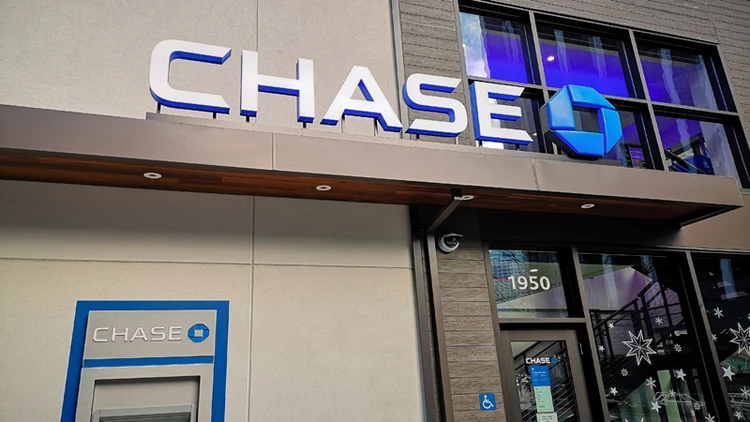
Chase taking heat for plans to start charging for overdrafts
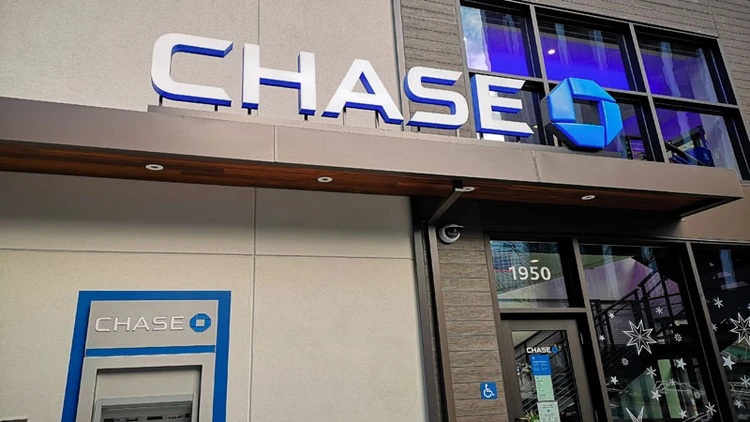
Chase Bank may have set sail into a hurricane with its plans to begin charging about 80 million customers for the overdrafts and other checking services that they now enjoy for free.
“The changes will be broad, sweeping, and significant,” Chase CEO Marianne Lake said, noting that those most affected will be individuals who can least afford the additional expenses.
Chase, the nation's largest consumer bank, is apparently trying to get back at the Consumer Financial Protection Bureau (CFPB), which wants to cut the overdraft fees that banks charge when customers overdraw their accounts.
The overdraft fees bring in billions of dollars a year, which consumer advocates say more than covers the banks' costs to cover overdrafts for a few days.
Chase may still get by with it but it may regret doing so in an election year, making itself a target for elected officials trying to win voter approval for their consumer protection efforts.
Senators Elizabeth Warren (D-MA) and Chris Van Hollen (D-MD) lost no time responding to Chase's plans. In a letter, the two demanded the bank scrap its plans
“JPMorgan Chase’s potential imposition of new costs on its customers in response to legal and long-overdue efforts to limit abusive fees—at a time when the then bank is making record profits and funneling those profits straight into the pockets of its executives —is outrageous,” the senators wrote.
Trying to close a loophole
The controversy traces back to January, when the CFPB unveiled a plan to close a loophole that exempts overdraft charges from the Truth in Lending Act.
"Decades ago, overdraft loans got special treatment to make it easier for banks to cover paper checks that were often sent through the mail," said CFPB Director Rohit Chopra in January. "Today, we are proposing rules to close a longstanding loophole that allowed many large banks to transform overdraft into a massive junk fee harvesting machine."
The CFPB's proposed rule would apply to the 175 largest banks in the country. These institutions typically charge $35 for an overdraft loan, even though the majority of consumers’ debit card overdrafts are for less than $26, and are repaid within three days.
Approximately 23 million households pay overdraft fees in any given year. The CFPB estimates that this rule may save consumers $3.5 billion or more in fees per year. The potential savings would translate to $150 for households that pay overdraft fees.
2023 was JPMorgan Chase's most profitable year in history, raking in $49.6 billion, while funneling $30 billion to its wealthy investors through a stock buyback program.
While Chase may succeed with its plan, consumers should know that there are thousands of smaller banks and credit unions that offer free checking and do not charge excessive overdraft fees. They generally offer nearly all of the services of larger banks at less cost.