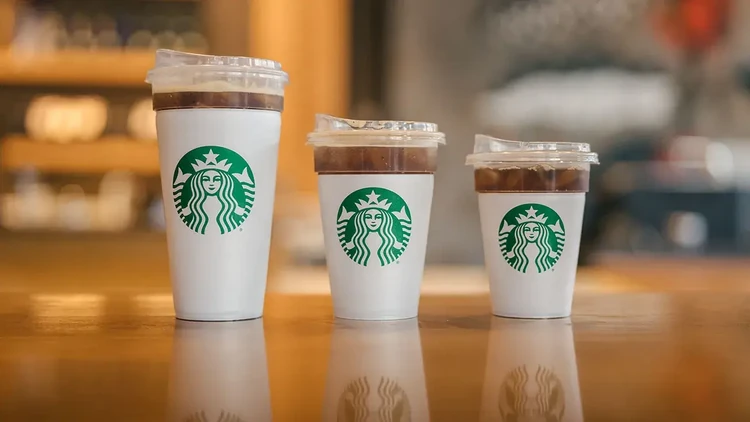
Starbucks is taking steps towards being more sustainable with a new line of cold cups that use less plastic.
With the coffee chain’s plans to cut carbon, water, and waste footprints by 2030, these remodeled cups are another step in that direction. The cups use 10%-20% less plastic compared to the original designs, and will now all use the same size lids.
A team of researchers led by Kyle Walker has been testing different methods to cut back on plastic use while keeping the integrity of the cups at Starbucks’ testing lab the Tryer Center. Over the last four years, Walker’s team has created a new cup that doesn’t compromise on sturdiness or keeping drinks cold.
“We invented new ways to test the cup that we didn’t have before,” Walker said. “Like, what if we take this feature and we move it up or down? Or what if we change the shape or the radius in this very small way? We were making all these micro-adjustments, and when we found the optimal combination, it was a real Eureka moment!”
Sustainability benefits
In taking a look at the cups from the outside, regular Starbucks-goers aren’t likely to notice much of a difference. Each of the cold cups – tall, grande, venti, and trenta – will still all be the same size. The major difference is in how they’re going to be made.
Starbucks has projected some of the key sustainability benefits over one year, which include:
Save emissions equivalent to taking 5,200 cars off the road
Conserve about 2,800 Olympic-sized swimming pools of water
Keep more than 13.5 million pounds of plastic from landfills
Accessibility benefits
The new cups will also include accessibility features that will make it easier for baristas in the midst of a busy rush.
There will be two ways of identifying which cup is which: the new cups will be embossed with the letter indicating the size, and there will also be raised dots on each cup that will correspond to the different sizes.
Starbucks cups also feature different measurement and fill lines. With these new cups, those lines will be black and white, so regardless of the drink customers order, baristas will be able to see the lines and accurately make the drink.
Additionally, Starbucks has created one lid for all of the newly designed cold cups. This will make storage easier, as well as make things easier for baristas.
The new cups are being rolled out at Starbucks stores across the country this month.