CONSUMER NEWS    RECALLS    COMPLAINT FORM    SCAM ALERTS  


Complain about a product or service

Small Claims Guide | Class Actions | Lemon Law | FAQ | Resources | Newsletters | Spanish
Automotive    Education    Electronics    Family    Finance    Health    Homeowners    Shopping    Travel   
NEWS   Latest |  Archives |  Auto |  Cells, etc. |  Computers |  Financial |  Health |  Homeowners |  Parents |  Privacy |  Scams |  Seniors |  Travel

Minor Mutations Found in Bird Flu Virus

Changes Increase Chances of Human Infection


March 20, 2006

Bird Flu

Bird Flu Not the Only Animal Disease Threat
Bird Flu Vaccine Trials 'Encouraging'
FDA Frets about Flu Drugs' Side Effects
World Not Ready For Bird Flu
Researchers: Bird Flu Pandemic Inevitable
Bird Flu Scare in Virginia
FDA Issues Flu Vaccine Guidelines
FDA Approves First Bird Flu Vaccine
More Flu Bugs Show Resistance To Anti-Virals
Seasonal Flu Shot Might Offer Some Bird Flu Protection
Experts Concerned about Tamiflu Overuse
Study Finds Much Bird Flu Planning is Misplaced
U.S. Orders More Bird Flu Vaccine
Scientists Identify Genetic Changes That Could Lead to Bird Flu Pandemic
Drug Interaction Can Render Tamiflu Ineffective
New Bird Flu Variant Renews Pandemic Concerns
Researchers Find New Weapon Against Flu Virus
Researchers Test Spreadability of Bird Flu Viruses to Humans
GlaxoSmithKline Claims Bird Flu Breaththrough
Global Corporations Struggle to Plan For Pandemic
Flu Pandemic Is "Inevitable," EU Experts Warn
Bird Flu Virus May Have Mutated In Indonesian Cases
Indonesian Nurse May Have Bird Flu
Study Warns of "Chaos" and "Panic" If Bird Flu Strikes
Investigators Find No Evidence Bird Flu Virus Has Mutated
Scientists Fear Bird Flu Virus May Have Mutated
Airlines Queasy About Quarantining Bird Flu Victims
More ...

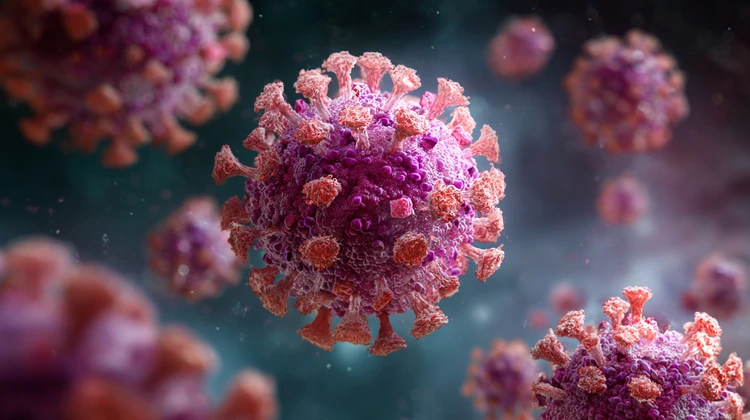
Scientists at The Scripps Research Institute, the Centers for Disease Control, and the Armed Forces Institute of Pathology have identified what the researchers described as a possible pathway for a particularly virulent strain of the avian flu virus to "gain a foothold in the human population."

The H5N1 avian influenza virus, commonly known as "bird flu," is a highly contagious and deadly disease in poultry. So far, its spread to humans has been limited, with 177 documented severe infections, and nearly 100 deaths in Indonesia, Vietnam, Thailand, Cambodia, China, Iraq, and Turkey as of March 14, 2006, according to the World Health Organization.

"With continued outbreaks of the H5N1 virus in poultry and wild birds, further human cases are likely," said Ian Wilson, a Scripps Research professor of molecular biology and head of the laboratory that conducted the recent study. "The potential for the emergence of a human-adapted H5 virus, either by re-assortment or mutation, is a clear threat to public health worldwide."

Of the H5N1 strains isolated to date, the researchers looked at A/Vietnam/1203/2004 (Viet04), one of the most pathogenic H5N1 viruses studied so far. The virus was originally isolated from a 10-year-old Vietnamese boy who died from the infection in 2004. The hemagglutinin (HA) structure from the Viet04 virus was found to be closely related to the 1918 virus HA, which caused some 50 million deaths worldwide.

Using a recently developed microarray technology -- hundreds of microscopic assay sites on a single small surface -- the study showed that relatively small mutations can result in switching the binding site preference of the avian virus from receptors in the intestinal tract of birds to the respiratory tract of humans. These mutations, the study noted, were already known in some human influenza viruses to increase binding for these receptors.

The study was published by ScienceXpress, the advance online version of the journal Science.

The study was careful to note that these results reveal only one possible route for virus adaptation. The study concluded that other, as yet "unidentified mutations" could emerge, allowing the avian virus to switch receptor specificity and make the jump to human-to-human transmission.

The work was supported by the National Institute of Allergy and Infectious Disease, the National Institute of General Medical Sciences and the National Institutes of Health.


Report Your Experience
If you've had a bad experience -- or a good one -- with a consumer product or service, we'd like to hear about it. All complaints are reviewed by class action attorneys and are considered for publication on our site. Knowledge is power! Help spread the word. File your consumer report now.


Consumer News

July 5 2008

Recent Recalls & Safety Alerts

Print, mail, etc.


FREE CONSUMER NEWSLETTERS

The Daily Consumer
Afternoons M-F

Sign up now!


Consumer News & Alerts
Every Sunday

Sign up now!


Knowledge is free.
Knowledge is power.


Back to the top |

Advertisement


Home | Rogues Gallery | Good Guys | Complaint Form | News | Recalls | Search | Video | FAQ |
Consumer Resources | Small Claims Guide | Lemon Law | Newsletter | Contact Us
Advertise With Us | Testimonials | Newsroom | RSS Feeds | Radio | Job Postings


Terms of Use Your use of this site constitutes acceptance of the Terms of Use

Advertisements on this site are placed and controlled by outside advertising networks. ConsumerAffairs.com does not evaluate or endorse the products and services advertised. See the FAQ for more information.

Company Response Welcome If complaints about your company appear on our site, we welcome your response. Please see the Response Form for more information.

For more information, see the FAQ and privacy policy. The information on this Web site is general in nature and is not intended as a substitute for competent legal advice.  ConsumerAffairs.com Inc. makes no representation as to the accuracy of the information herein provided and assumes no liability for any damages or loss arising from the use thereof. 

Copyright © 2003-2008 ConsumerAffairs.com Inc.  All Rights Reserved.